Guest Post - Elite sports - Single vs Double Weave Gis
Single Weave vs Double Weave BJJ Gi
The gi worn on the mat is more than just a uniform. It shapes how a grappler moves, how long the gear holds up, and even how a match plays out. Yet, one of the most overlooked choices in BJJ gear is the weave type. Single weave or double weave, each brings a distinct set of traits that can make or break a training session.
Leading brands like Elite Sports, one of the best BJJ gi makers today, craft both weave types with care and skill. The Elite Sports Ultra Light Preshrunk White Adult BJJ Gi is a prime pick for those who want a light, durable BJJ gi made up of pearl weave that holds up match after match. For grapplers at any level, knowing the key traits of each weave type leads to a much smarter gear choice.
1. What Is a Single Weave Gi?
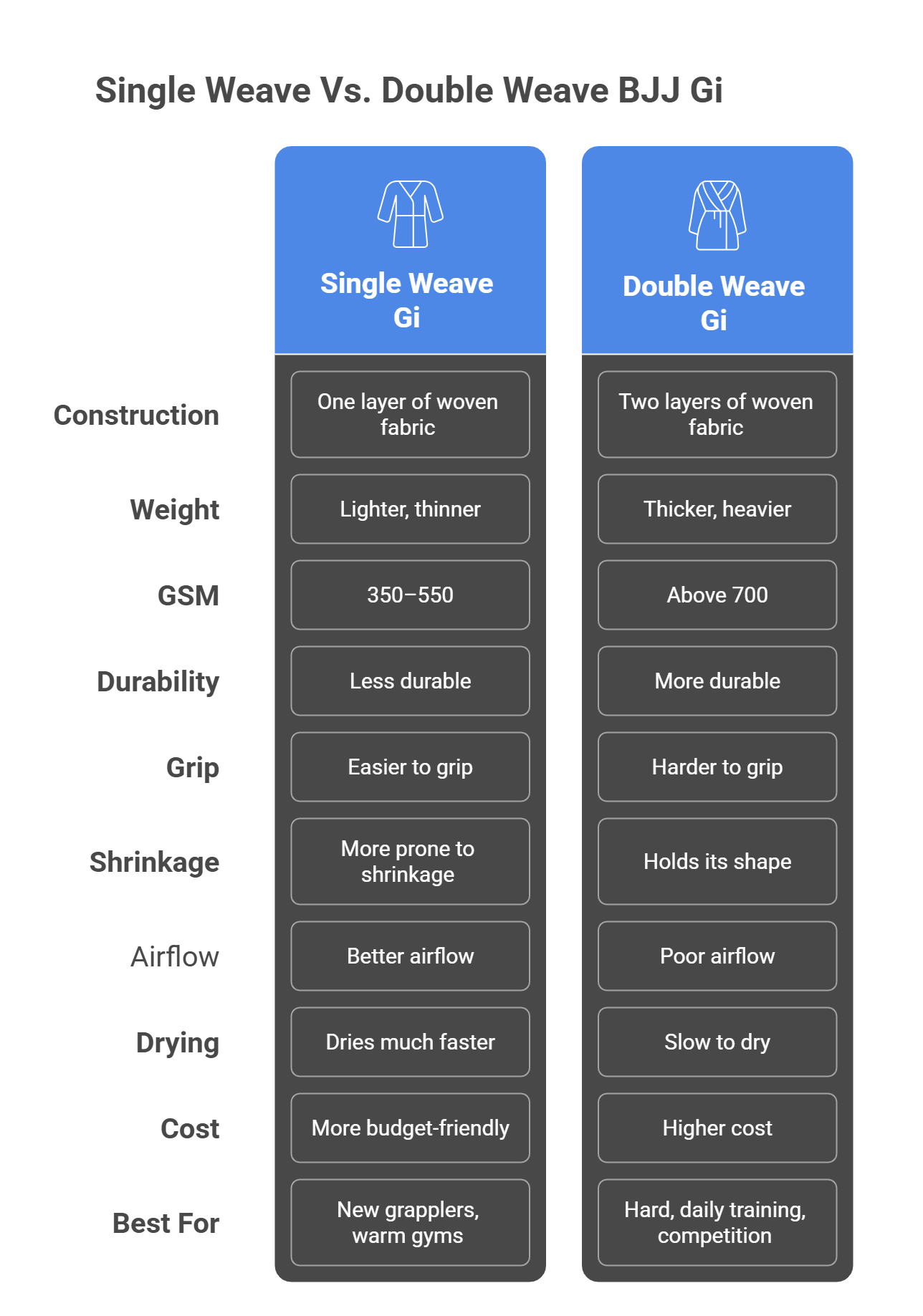
A single-weave gi is made from one layer of woven fabric. The result is a lighter, thinner top that is easy to move in. Most single-weave gis have a GSM (grams per square meter) in the 350–550 range. This makes them a top pick for warm gyms, summer training, and travel.
1.1 Pros of Single Weave Gis
- Light and easy to move in: Single-weave gis are far lighter than double-weave options. During long training sessions or when competing under strict weight limits, less fabric means less drag on the body. Over time, that ease of movement adds up in a real way.
- Better airflow: Thinner fabric allows air to pass through more easily. During hard rolls or long rounds, a single-weave gi keeps the body cooler, a key advantage in warm or heated gyms where sweat builds up quickly.
- Dries much faster: After training or washing, single-weave gis dry much faster than thick double-weave options. For daily trainers and those who travel to meets, this saves real time and keeps training on track.
- More budget-friendly: In most cases, single-weave gis come at a lower price. This makes them a strong first gi for new grapplers or a solid backup for those who already own a heavier option.
1.2 Cons of Single Weave Gis
- Less durable: Thinner fabric wears out faster under hard, frequent use. Collar areas and sleeve cuffs tend to show wear first, most often after months of heavy rolling.
- Easier to grip: Lighter, softer fabric gives opponents a slightly firmer hold. In a match, this can work against the wearer during grip-heavy exchanges on the ground.
- More prone to shrinkage: Thinner fabric tends to shrink more after washing if heat settings are not closely monitored. Always air-dry or use a low-heat cycle to keep the fit true.
2. What Is a Double Weave Gi?
A double-weave gi uses two layers of woven fabric stitched together. The result is a thick, heavy top that can withstand years of hard training. Double-woven gis often have a GSM above 700, nearly twice the weight of most single-woven options.
2.1 Pros of Double Weave Gis
- Built to last: Double-weave fabric resists tears, frays, and wear far better than single weave. For grapplers who train hard five or six days a week, this kind of toughness pays off over the long run without frequent gear replacement.
- Harder to grip: Thick, stiff fabric makes it much harder for an opponent to get a firm hold. This can shift a match in the wearer's favor during grip-heavy exchanges, both standing and on the ground.
- Holds its shape: Double weave gis keep their cut and form even after years of use and washing. The fabric does not break down as quickly, and the fit stays true for much longer than a single-weave option.
2.2 Cons of Double Weave Gis
- Heavier on the body: The added weight can be a real issue for weight-class athletes. A double-weave gi can weigh close to twice as much as a single-weave gi, which matters when cutting to make weight before a meet.
- Poor airflow: Thick fabric traps heat. In warm gyms or during hot months, training in a double-weave gi can feel tiring and intense, cutting into focus and output during long mat sessions.
- Slow to dry: Double-weave gis take much longer to dry after washing. For daily training schedules, this can lead to damp gear and added hassle between sessions.
- Higher cost: Quality double-weave gis costs more due to the extra material and added build effort. For budget-conscious grapplers, this is a real factor to weigh before buying.
3. Single vs Double Weave: Which One to Pick?
The right choice depends on training goals, body type, and the setting where most training takes place. Here is a quick guide:
For new grapplers: A single-weave gi is the better starting point. It is light, easy to move around, and lower-cost, all key for those just finding their footing on the mat.
For hard, daily training: A double-weave gi offers the toughness needed for five or six days of weekly mat time. It will not wear out fast under that kind of load.
For competition: Most grapplers go with a single weave at meets to stay under weight limits with ease. Less gi weight means more room to work with when cutting.
For warm or heated gyms: Single weave wins here, better airflow and faster drying make a clear, real difference during long, tough sessions.
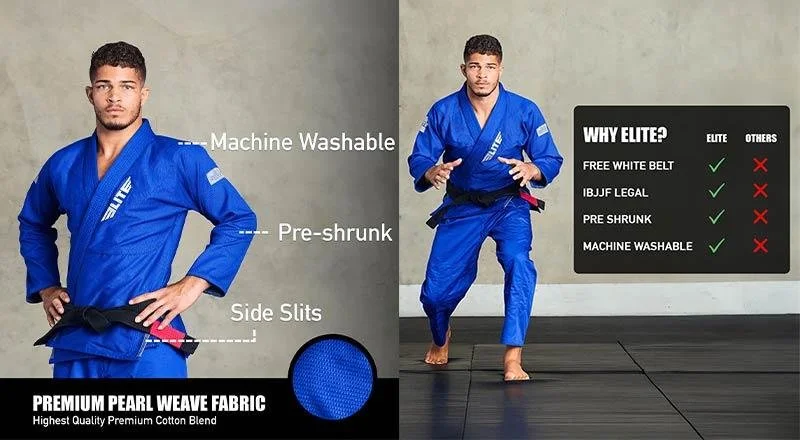
For those who want a gi that blends lightweight with solid build, the Elite Sports BJJ Gi collection offers a wide range of options for men, women, and kids. Elite Sports makes BJJ Gis primarily from durable yet lightweight materials such as 400 GSM Pearl Weave, which is widely considered a superior alternative to traditional single- or double-weave fabrics.
As the best BJJ gi maker for grapplers at every level, Elite builds each gi with high-grade fabric, tight stitching, and a fit made for real training demands, whether on a local gym mat or at a high-level meet.
4. Final Thoughts
Both single-weave and double-weave gis have a strong place in BJJ. Neither type is better than the other in every case; the right choice depends fully on the needs of the grappler wearing it.
For those who want top-tier gear across both weave types, Elite Sports stands as one of the best BJJ gi brands in the sport. As a world-class maker of high-grade gis and rash guards, Elite Sports produces gear that holds up through the demands of hard training and high-level competition alike, session after session, season after season.
The weave type is just one piece of the puzzle, but picking the right one is a smart first step toward better training, better gear, and better results on the mat.